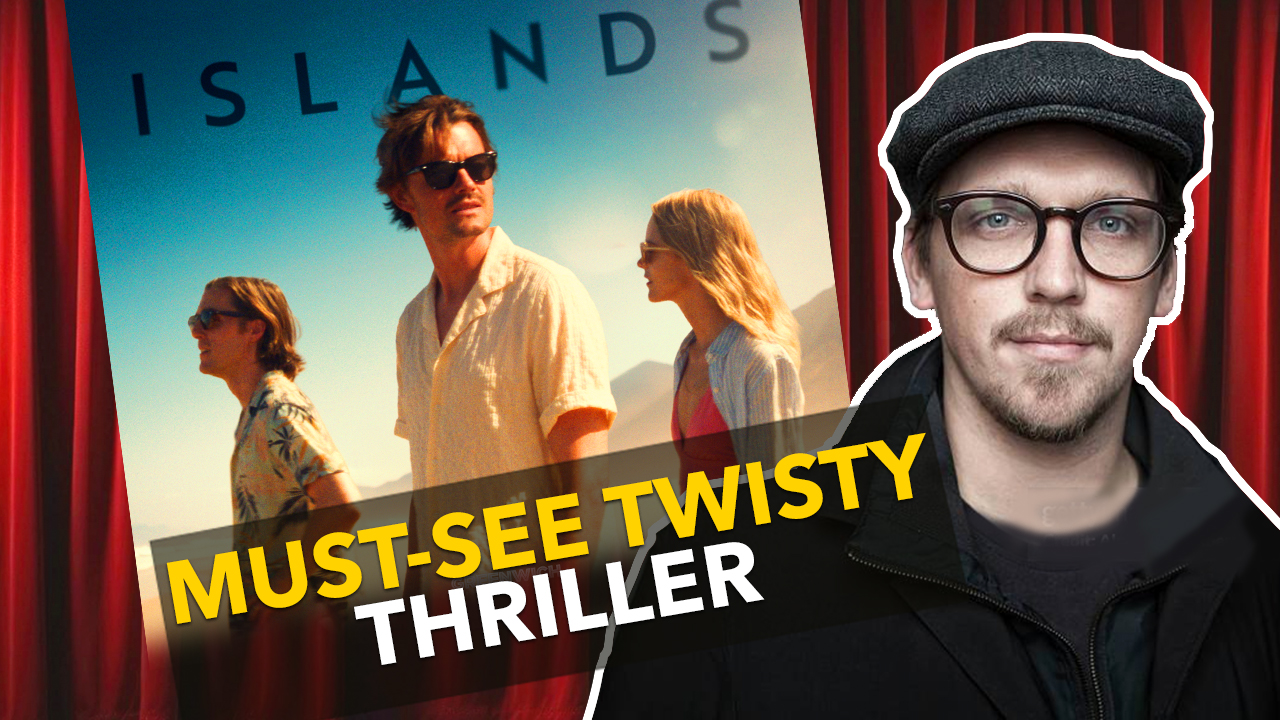
It’s only January, but if the new film ISLANDS is any indication of what lies ahead, 2026 is already shaping up to be a hell of a year at the cinema.

Written and directed by Jan-Ole Gerster, and inspired by a character he observed while vacationing on the island of Fuerteventura, the film is a sexy, sun-drenched mystery that slowly tightens its grip. The story feels cut from the cloth of a Raymond Chandler or Patricia Highsmith novel — but just when noir convention tells you the plot will zig, Gerster makes it zag.

At the center of the film’s simmering love triangle is Sam Riley, unforgettable as Joy Division frontman Ian Curtis in the 2007 biopic CONTROL. He’s joined by Stacy Martin and Jack Farthing, perfectly cast as a troubled married couple whose arrival sets the story quietly — and irrevocably — in motion.

Since premiering at the Berlin Film Festival, ISLANDS has drawn widespread acclaim. Variety was so impressed that it named Gerster one of its 10 Directors to Watch for 2026.

To learn more about how ISLANDScame into being, we invite you to listen in on our conversation with Jan-Ole Gerster as he discusses his latest film on INSIDE THE ARTHOUSE—starting now.

The Sundance Film Festival is back. And with the festival, we can expect stories in the news about the latest “big” acquisition of premiering films. But while the headlines focus on the acquisition price, we want to understand what’s going on beyond the number. How do these deals get done — and more importantly — what happens with the 99% of films that DON’T get picked up for distribution in a bidding war.

To learn more about how films get from production to distribution, we sat down with industry veteran Gary Rubin. In the go-go 90’s and early aughts, he was buying films at Artisan Entertainment, including being involved with the acquisition of THE BLAIR WITCH PROJECT. 

Later, he formed his own company, First Independent Pictures, handling the distribution of BIG FAN and HOLY ROLLERS.  

Lately, he’s switched to the other side, helping producers position their films for sale as a sales agent.  

And when buyers don’t bite, he’s ready to step in as a marketing consultant, guiding filmmakers through the process of self-distribution.

Making a film is a huge challenge. But in many respects, actually getting it in front of an audience is even tougher.  

So if you’re a filmmaker, or even just an interested consumer of independent films, you’ll want to listen in and learn more from our “inside baseball” conversation with Gary Rubin, on INSIDE THE ARTHOUSE… starting now.

As the Sundance Film Festival approaches its final year in Park City, we’re taking a moment to reflect on the artists who didn’t just pass through Sundance—but helped define it, and in doing so, shaped an entire era of American independent cinema.

Among those enduring icons is Steve Buscemi.

Buscemi’s breakthrough came with Bill Sherwood’s PARTING GLANCES, which premiered at Sundance in 1986. The film helped spark the New Queer Cinema movement and marked one of the earliest moments when Sundance revealed itself as a true launchpad for bold, deeply personal storytelling.

Throughout the late 1980s and 1990s, Buscemi became one of the most recognizable faces of independent film, collaborating with a generation of filmmakers who would go on to redefine the medium—including Joel and Ethan Coen, Quentin Tarantino, Jim Jarmusch, Abel Ferrara, and Tom DiCillo.

His unforgettable performance in Alexander Rockwell’s IN THE SOUP earned the film the Grand Jury Prize at Sundance in 1992, cementing Buscemi’s place at the heart of the indie film explosion of the ’90s.

More recently, Buscemi was honored by IndieCollect as part of their RescueFest 2025 program, recognizing his lasting impact on independent cinema and the preservation of film history.

For the occasion, IndieCollect founder Sandra Schulberg invited Greg to moderate a conversation with Steve, co-hosting alongside Michelle Satter, founder and longtime director of the Sundance Institute Labs.

We’re proud to bring that conversation to you now – this is Steve Buscemi in a Q & A format, on INSIDE THE ARTHOUSE— starting now.

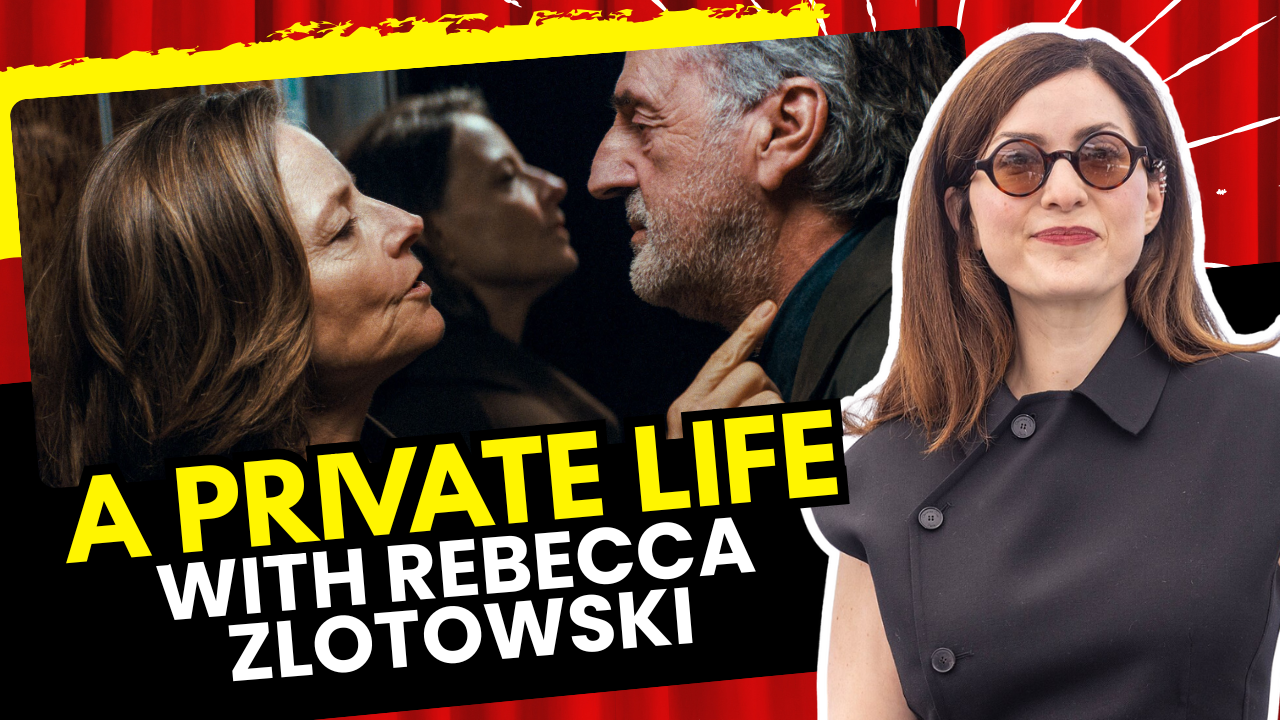
Rebecca Zlotowski first caught our attention with her fifth feature, OTHER PEOPLE’S CHILDREN, which was released in the U.S. in 2023. So we were especially excited to screen her follow-up: A PRIVATE LIFE — a sleek, stylish French-language film that’s as entertaining as it is unexpectedly moving.

The film boasts a stellar cast led by Oscar-winner Jodie Foster and César-winner Daniel Auteuil, making it one of the most exciting cast-and-director pairings of the year.

In A PRIVATE LIFE, Foster plays a tightly wound psychiatrist whose carefully ordered world begins to unravel when one of her patients dies under mysterious circumstances. Blending mystery, romance, and comedy, it’s the kind of genre cocktail that shouldn’t work — but somehow does… and beautifully.

The result is a gripping, emotionally intelligent thriller with a real pulse, anchored by one of Foster’s most nuanced performances in years.

While this isn’t Foster’s first time acting in French, it may be her most accomplished — and the role has already made history, with Foster becoming the first American ever nominated for a César in an acting category.

To learn more about how the film came to be, we spent time with filmmaker Rebecca Zlotowski, and we’re thrilled to share that conversation with you.

Listen now to our episode on A PRIVATE LIFE with Rebecca Zlotowski — on INSIDE THE ARTHOUSE, starting now.

We love foreign films at INSIDE THE ARTHOUSE. When they work, they’re more than entertainment—they’re a passport. A way to step into another part of the world and experience its rhythms, its customs, and its contradictions in a way no tour bus ever could.

That’s exactly what happens in director Neeraj Ghaywan’s powerful new drama HOMEBOUND—a film set in contemporary India that follows two lifelong friends trying to build a future against overwhelming odds. One is Muslim, the other Dalit, and their bond is tested by caste prejudice, religious discrimination, and the brutal realities of social class.

Inspired in part by a New York Times report from 2020, HOMEBOUND doesn’t soften what it shows us. It confronts the everyday humiliations that shape opportunity—and in a devastating final act, captures the life-shattering consequences of the COVID-19 lockdown, especially for migrant workers, who were among the hardest hit by the pandemic’s economic and social fallout.

Executive produced by Martin Scorsese, HOMEBOUND has emerged as a standout in the Best International Feature Oscar conversation, and it should not be counted out.

Neeraj Ghaywan was in Los Angeles for screenings, and Greg jumped at the chance to sit down with him in person at the Royal Theatre for a one-on-one conversation. We invite you to listen in.

Listen now to our conversation with director Neeraj Ghaywan — on INSIDE THE ARTHOUSE.

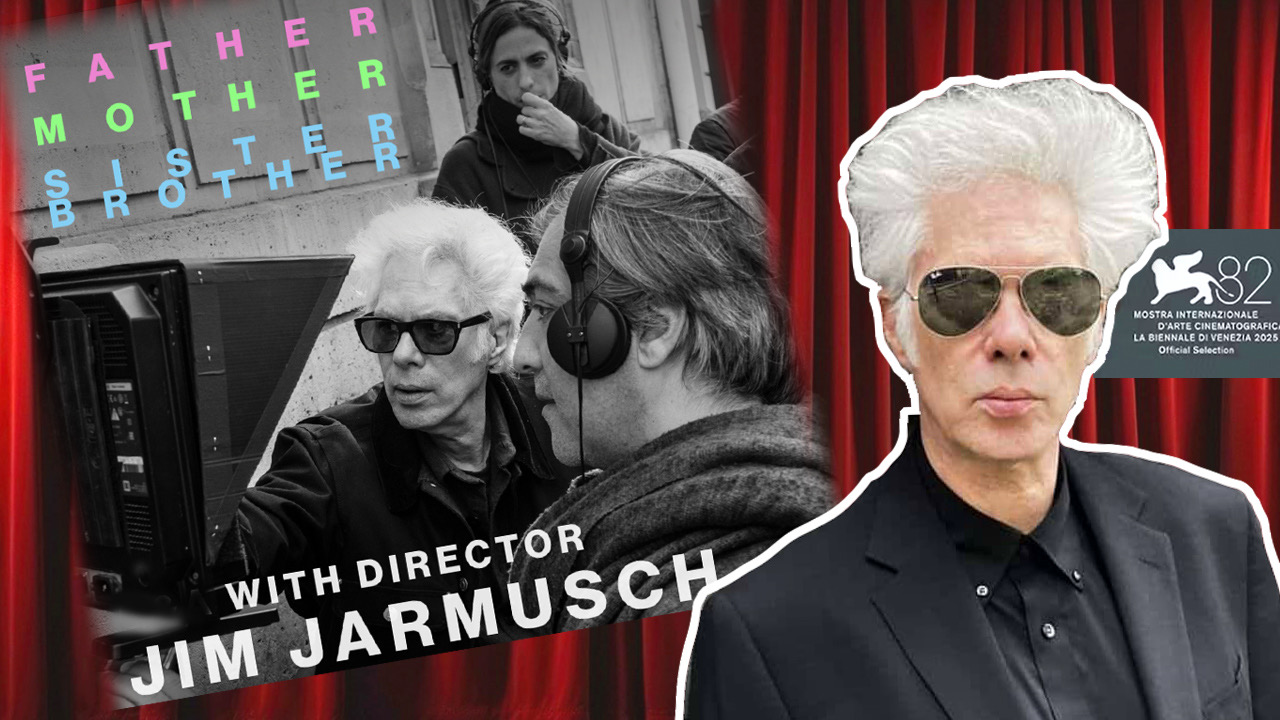
Since breaking onto the scene with his 1984 breakthrough STRANGER THAN PARADISE, Jim Jarmusch has remained one of the most singular voices in American independent cinema. While many filmmakers of his era moved into studio franchises or streaming-backed blockbusters, Jarmusch has stayed fiercely committed to his indie roots—releasing a new film every few years and reminding us what truly idiosyncratic filmmaking can look like.

His latest film, FATHER MOTHER SISTER BROTHER — winner of the Golden Lion at the Venice International Film Festival — marks a return to one of his most iconic storytelling modes: a set of separate yet interconnected stories, each with its own rhythm and emotional temperature. The signature Jarmusch deadpan humor is back, but this time it’s paired with an unexpectedly moving emotional depth that builds toward a quietly powerful final note.

The ensemble cast is exceptional, featuring longtime collaborators Tom Waits and Adam Driver, alongside new Jarmusch players including Charlotte Rampling, Cate Blanchett, Vicky Krieps, Mayim Bialik, Indya Moore, and Luka Sabbat—a lineup that feels like a cross-section of modern cinema royalty.

We’re thrilled to share our conversation with Jim about how the film came together, what draws him to interconnected storytelling, and how he continues to evolve while remaining unmistakably himself.

Join us for our conversation with indie icon Jim Jarmusch as we discuss FATHER MOTHER SISTER BROTHER — starting now on INSIDE THE ARTHOUSE.

When a film earns a 100% rating on Rotten Tomatoes, there’s often a quiet suspicion that it’s a critic’s darling—admired more than embraced. But Charlie Polinger’s debut feature THE PLAGUE is something rarer: a film that marries the visceral pull of a taut thriller with the intelligence and moral urgency of serious arthouse cinema.

In this episode of INSIDE THE ARTHOUSE, we sit down with writer-director Charlie Polinger to discuss a film that has quickly become one of the most talked-about releases of 2025. Drawing from memories of his own pre-adolescence, Polinger crafts a story that feels deeply personal while speaking uncomfortably—and urgently—to the present moment. THE PLAGUE explores how casual cruelty, once confined to private spaces, has become increasingly normalized and even rewarded in public life.

The film premiered at Cannes, where it reportedly received an 11-minute standing ovation—an extraordinary response for a first feature led by a cast of unknown child actors. That reception wasn’t just about novelty. It was recognition of a filmmaker with a confident voice and a film that understands how to unsettle, provoke, and implicate its audience without sacrificing narrative momentum.
THE PLAGUE is tense, unsettling, and deeply felt—a debut that suggests Polinger is not only a director to watch, but one already operating with uncommon clarity and purpose.

To learn more about one of the most striking films of the year, join us for our conversation with Charlie Polinger—on INSIDE THE ARTHOUSE, starting now.


In this episode of INSIDE THE ARTHOUSE, we’re stepping outside our usual filmmaker deep dives to focus on a seismic moment in Hollywood—one that could reshape the film industry from top to bottom.

Warner Bros., one of the oldest and most influential studios in cinema history, is officially up for sale. After considering multiple offers, the company initially moved toward a deal with Netflix — a move that would fold a century of studio legacy into one of the world’s biggest streaming platforms. But the story didn’t end there. Within days, Paramount, backed by tech titan Larry Ellison, launched a surprise counteroffer, escalating the situation into a full-scale bidding war.

None of these deals are finalized, and each faces major regulatory hurdles. But the fact that Warner Bros. is even on the table says a lot about where the media landscape is headed. And while arthouse cinema occupies a smaller slice of that ecosystem, the ripple effects of consolidation will absolutely shape what films get made, how they’re distributed, and where — and whether— you get to see them on a big screen.

To help us unpack all of this, we’re joined by two experts: Ross Melnick, professor of Film and Media Studies at UC Santa Barbara, and a leading voice on the history of exhibition… And Chris Yogerst, author of The Warner Brothers, one of the definitive histories of the studio now caught in the middle of this bidding war.

This conversation was recorded on December 10th. Given how fast events are moving, details may shift by the time you hear this — but our goal is to give you the context and insight needed to understand the stakes, the history, and the possible futures of this moment.

So let’s get into it: how consolidation shapes the movies you love, the theaters that show them, and the cultural imagination they help build.

That conversation starts now — on INSIDE THE ARTHOUSE.

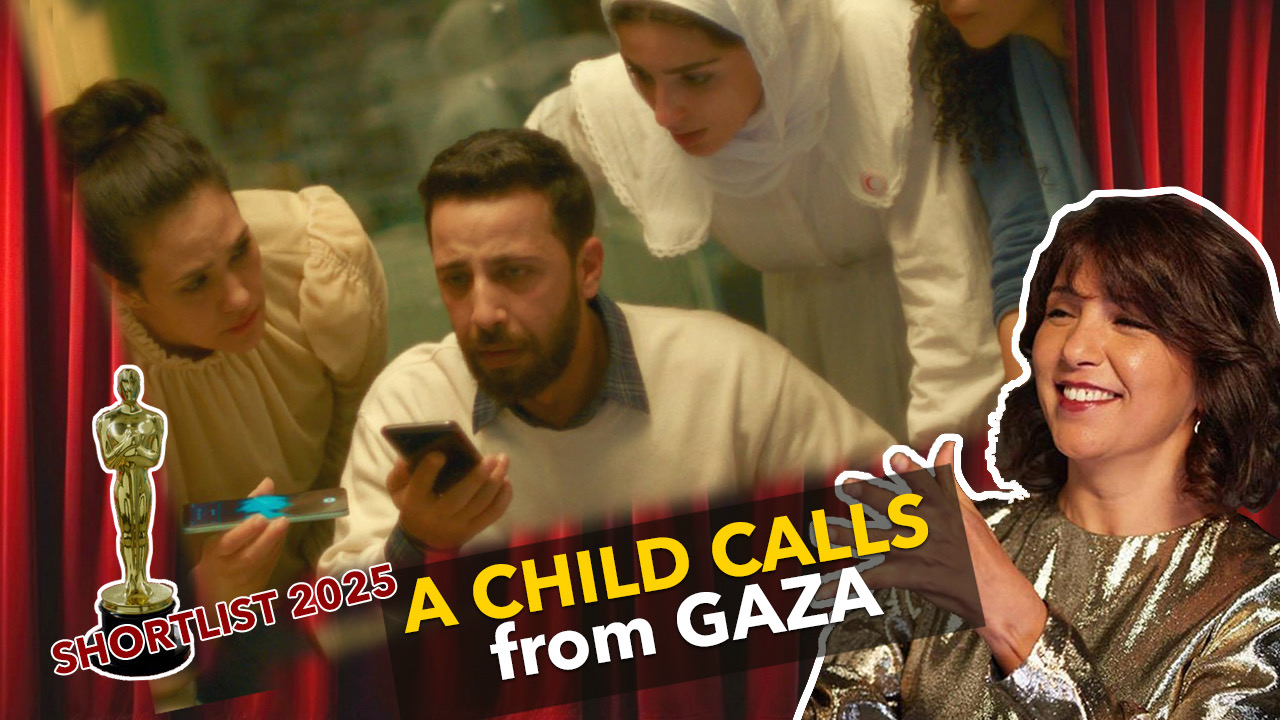
In the press kit for her new film THE VOICE OF HIND RAJAB, director Kaouther Ben Hania writes that cinema “doesn’t report, it remembers. It doesn’t argue, it makes you feel.”

And that’s exactly what this film does. No matter where you stand on the complicated realpolitik of the region, THE VOICE OF HIND RAJAB hits with a force that bypasses policy and lands straight in the heart. We defy anyone to not be moved – to not FEEL – the anguish of the true-life story told in this devastating film.

The film revisits the true story of six-year-old Hind Rajab, trapped inside her family’s car in Gaza after an attack left her surrounded by the bodies of her aunts, uncles, and cousins. As she calls for help, workers from the Palestinian Red Crescent Society try to keep her calm while desperately trying to arrange safe passage for an ambulance to come rescue her.

Ben Hania uses the actual emergency call recording, interwoven with actors portraying the Red Crescent responders, to create a film that plays like a taut thriller—visceral, exacting, and emotionally overwhelming. Though based on true events and grounded in meticulous research, the film is not a documentary. Coming from a filmmaker nominated for both Best International Feature and Best Documentary, that distinction is deliberate. This is narrative cinema designed to make us feel, first and foremost. 

Selected as Tunisia’s official Oscar submission for Best International Feature, THE VOICE OF HIND RAJAB opens in theaters in New York and Los Angeles on December 17, before expanding across the U.S. in the following weeks. The film was recently announced as having made the Academy Awards shortlist in the Best International Feature category.

To understand how this extraordinary film came to be—and how its director approached one of the most harrowing stories of the year—join us for our conversation with Kaouther Ben Hania, starting now onINSIDE THE ARTHOUSE.


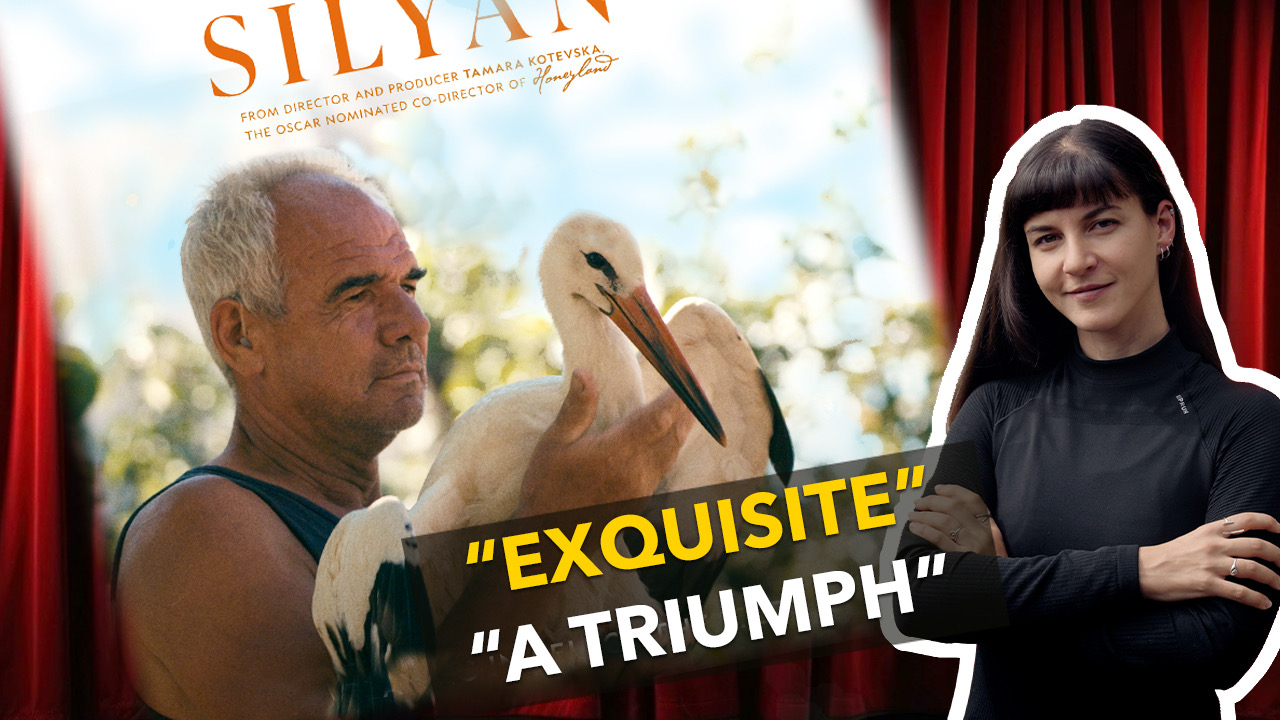
In THE TALE OF SILYAN — the highly anticipated follow-up to the Oscar-nominated documentary HONEYLAND— filmmaker Tamara Kotevska set out to explore how climate change is reshaping the migration patterns of storks in Macedonia. But over three years of filming, she and cinematographer Jean Dakar uncovered something far more expansive: an intimate portrait of global economic pressure, human migration, the unraveling of rural communities, and the fragile, deeply intertwined relationship between people, land, and wildlife.

What’s remarkable is how, at moments, THE TALE OF SILYAN plays like a narrative feature — yet nothing is staged. Every frame is real. And the story that unfolds is genuinely astonishing.

To dig into how this groundbreaking documentary came together — from early concept to final cut — we sat down with the film’s DP, Jean Dakar, for a conversation about craft, access, and capturing truth on camera.

That conversation on INSIDE THE ARTHOUSE, starting now…