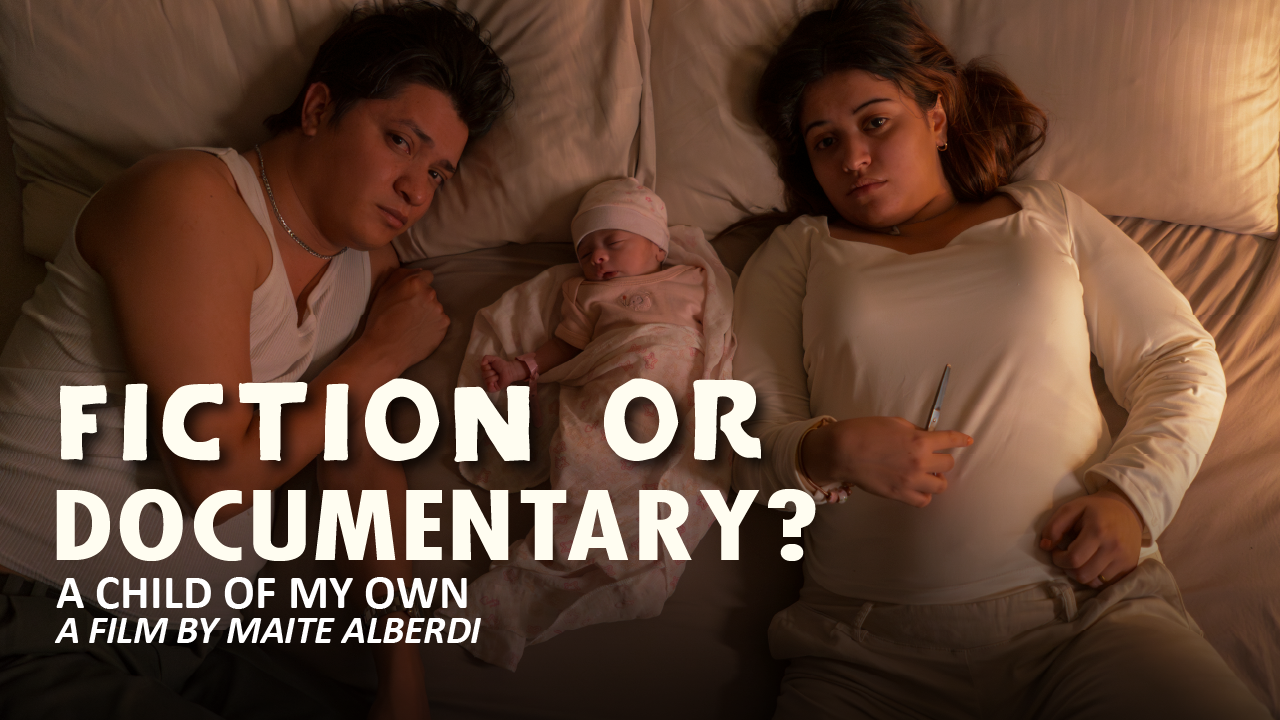
Since breaking onto the scene with his 1984 breakthrough STRANGER THAN PARADISE, Jim Jarmusch has remained one of the most singular voices in American independent cinema. While many filmmakers of his era moved into studio franchises or streaming-backed blockbusters, Jarmusch has stayed fiercely committed to his indie roots—releasing a new film every few years and reminding us what truly idiosyncratic filmmaking can look like.

His latest film, FATHER MOTHER SISTER BROTHER — winner of the Golden Lion at the Venice International Film Festival — marks a return to one of his most iconic storytelling modes: a set of separate yet interconnected stories, each with its own rhythm and emotional temperature. The signature Jarmusch deadpan humor is back, but this time it’s paired with an unexpectedly moving emotional depth that builds toward a quietly powerful final note.

The ensemble cast is exceptional, featuring longtime collaborators Tom Waits and Adam Driver, alongside new Jarmusch players including Charlotte Rampling, Cate Blanchett, Vicky Krieps, Mayim Bialik, Indya Moore, and Luka Sabbat—a lineup that feels like a cross-section of modern cinema royalty.

We’re thrilled to share our conversation with Jim about how the film came together, what draws him to interconnected storytelling, and how he continues to evolve while remaining unmistakably himself.

Join us for our conversation with indie icon Jim Jarmusch as we discuss FATHER MOTHER SISTER BROTHER — starting now on INSIDE THE ARTHOUSE.

When a film earns a 100% rating on Rotten Tomatoes, there’s often a quiet suspicion that it’s a critic’s darling—admired more than embraced. But Charlie Polinger’s debut feature THE PLAGUE is something rarer: a film that marries the visceral pull of a taut thriller with the intelligence and moral urgency of serious arthouse cinema.

In this episode of INSIDE THE ARTHOUSE, we sit down with writer-director Charlie Polinger to discuss a film that has quickly become one of the most talked-about releases of 2025. Drawing from memories of his own pre-adolescence, Polinger crafts a story that feels deeply personal while speaking uncomfortably—and urgently—to the present moment. THE PLAGUE explores how casual cruelty, once confined to private spaces, has become increasingly normalized and even rewarded in public life.

The film premiered at Cannes, where it reportedly received an 11-minute standing ovation—an extraordinary response for a first feature led by a cast of unknown child actors. That reception wasn’t just about novelty. It was recognition of a filmmaker with a confident voice and a film that understands how to unsettle, provoke, and implicate its audience without sacrificing narrative momentum.
THE PLAGUE is tense, unsettling, and deeply felt—a debut that suggests Polinger is not only a director to watch, but one already operating with uncommon clarity and purpose.

To learn more about one of the most striking films of the year, join us for our conversation with Charlie Polinger—on INSIDE THE ARTHOUSE, starting now.


In this episode of INSIDE THE ARTHOUSE, we’re stepping outside our usual filmmaker deep dives to focus on a seismic moment in Hollywood—one that could reshape the film industry from top to bottom.

Warner Bros., one of the oldest and most influential studios in cinema history, is officially up for sale. After considering multiple offers, the company initially moved toward a deal with Netflix — a move that would fold a century of studio legacy into one of the world’s biggest streaming platforms. But the story didn’t end there. Within days, Paramount, backed by tech titan Larry Ellison, launched a surprise counteroffer, escalating the situation into a full-scale bidding war.

None of these deals are finalized, and each faces major regulatory hurdles. But the fact that Warner Bros. is even on the table says a lot about where the media landscape is headed. And while arthouse cinema occupies a smaller slice of that ecosystem, the ripple effects of consolidation will absolutely shape what films get made, how they’re distributed, and where — and whether— you get to see them on a big screen.

To help us unpack all of this, we’re joined by two experts: Ross Melnick, professor of Film and Media Studies at UC Santa Barbara, and a leading voice on the history of exhibition… And Chris Yogerst, author of The Warner Brothers, one of the definitive histories of the studio now caught in the middle of this bidding war.

This conversation was recorded on December 10th. Given how fast events are moving, details may shift by the time you hear this — but our goal is to give you the context and insight needed to understand the stakes, the history, and the possible futures of this moment.

So let’s get into it: how consolidation shapes the movies you love, the theaters that show them, and the cultural imagination they help build.

That conversation starts now — on INSIDE THE ARTHOUSE.

In the press kit for her new film THE VOICE OF HIND RAJAB, director Kaouther Ben Hania writes that cinema “doesn’t report, it remembers. It doesn’t argue, it makes you feel.”

And that’s exactly what this film does. No matter where you stand on the complicated realpolitik of the region, THE VOICE OF HIND RAJAB hits with a force that bypasses policy and lands straight in the heart. We defy anyone to not be moved – to not FEEL – the anguish of the true-life story told in this devastating film.

The film revisits the true story of six-year-old Hind Rajab, trapped inside her family’s car in Gaza after an attack left her surrounded by the bodies of her aunts, uncles, and cousins. As she calls for help, workers from the Palestinian Red Crescent Society try to keep her calm while desperately trying to arrange safe passage for an ambulance to come rescue her.

Ben Hania uses the actual emergency call recording, interwoven with actors portraying the Red Crescent responders, to create a film that plays like a taut thriller—visceral, exacting, and emotionally overwhelming. Though based on true events and grounded in meticulous research, the film is not a documentary. Coming from a filmmaker nominated for both Best International Feature and Best Documentary, that distinction is deliberate. This is narrative cinema designed to make us feel, first and foremost. 

Selected as Tunisia’s official Oscar submission for Best International Feature, THE VOICE OF HIND RAJAB opens in theaters in New York and Los Angeles on December 17, before expanding across the U.S. in the following weeks. The film was recently announced as having made the Academy Awards shortlist in the Best International Feature category.

To understand how this extraordinary film came to be—and how its director approached one of the most harrowing stories of the year—join us for our conversation with Kaouther Ben Hania, starting now onINSIDE THE ARTHOUSE.


In THE TALE OF SILYAN — the highly anticipated follow-up to the Oscar-nominated documentary HONEYLAND— filmmaker Tamara Kotevska set out to explore how climate change is reshaping the migration patterns of storks in Macedonia. But over three years of filming, she and cinematographer Jean Dakar uncovered something far more expansive: an intimate portrait of global economic pressure, human migration, the unraveling of rural communities, and the fragile, deeply intertwined relationship between people, land, and wildlife.

What’s remarkable is how, at moments, THE TALE OF SILYAN plays like a narrative feature — yet nothing is staged. Every frame is real. And the story that unfolds is genuinely astonishing.

To dig into how this groundbreaking documentary came together — from early concept to final cut — we sat down with the film’s DP, Jean Dakar, for a conversation about craft, access, and capturing truth on camera.

That conversation on INSIDE THE ARTHOUSE, starting now…


They say journalism is the first rough draft of history—but what about films that confront historical events on screen? Are these works attempts at historical record or cinematic stories that use the past to uncover deeper emotional truths?

With her new film ALL THAT’S LEFT OF YOU, filmmaker Cherien Dabis brings a bold and deeply human perspective to a chapter of history rarely explored in American cinema. While the film depicts the Nakba and the 1948 expulsion from Jaffa, Dabis goes far beyond historical recreation—crafting a powerful emotional narrative that stands among the finest films of the year.

This sweeping, multigenerational epic follows one family across 70 years, tracing their journey from displacement during the 1948 war to life as refugees in the West Bank and beyond. Dabis stars in the film alongside three extraordinary actors from the renowned Bakri family—Adam Bakri, Saleh Bakri, and Mohammad Bakri—whose performances bring the family’s story to life with remarkable authenticity and depth.

After premiering to acclaim at the Sundance Film Festival, ALL THAT’S LEFT OF YOU went on to win the prestigious Audience Award at the Sydney Film Festival. The film has now been chosen as Jordan’s official submission for Best International Feature at the Academy Awards, and we believe it has every chance of making the year’s shortlist. To hear more about ALL THAT’S LEFT OF YOU, please sit back and enjoy our conversation with filmmaker, writer, and actress, Cherien Dabis, starting now on INSIDE THE ARTHOUSE

$7,000 might buy you a used car—but in Hollywood, it barely covers a single day of craft services on a studio film set.

But in the world of microbudget filmmaking, $7K became the entire production budget for filmmakers Joe Burke and Oliver Cooper, who used that tiny sum to create a full-length, truly independent feature film.

With a small crew, non-professional actors, shooting quickly, with a raw, natural shooting style, they crafted BURT— a miracle of sweetness and depth— a film that captures the spirit of classic indie cinema, echoing the charm of mumblecore pioneers like Andrew Bujalski, Greta Gerwig, and the Duplass Brothers.

Having wowed audiences at numerous film festivals, Joe and Oliver are channeling the Cassavetes playbook—and releasing BURT themselves into theaters.

On this episode of Inside the Arthouse, we wanted to talk to them about the inspiration for the film, their creative process, how they pulled off a feature on a shoestring budget, and the strategy behind bringing an independent film directly to audiences.

BURT is a small gem of a film, and Joe and Oliver are great examples of the indie spirit.

So if you’re dreaming of selling your car to make a movie—or want to learn how authentic independent films get made—you’ll want to start this episode right now… on Inside the Arthouse.

The question of illegal immigration is all over the news these days. But in a media environment where journalists are trying to either make you angry or afraid, it’s not always easy to see the actual people beyond the headlines.

In his new documentary ROADS OF FIRE, filmmaker Nathaniel Lezra turns down the volume, providing a nuanced look at three sides of this complicated situation.

One thread follows a group of immigrants making their way from Venezuela to Colombia, where they start the dangerous overland hike through Panama’s Darién Gap.

Another thread introduces us to the advocates, religious leaders, and community volunteers working in and around New York City who are trying to house, feed, and guide the immigrants who have been granted temporary asylum.

And finally, we spend time getting to know one asylum seeker who is trying to make a new life in the United States for herself and her children as she flees an abusive situation in her home country.

Whatever you believe about the policies around the issue of immigration, there is much to learn and appreciate in this timely film, and we hope that our discussion with Nathaniel Lezra is a worthy accompaniment.

So join us for our conversation on INSIDE THE ARTHOUSE, starting now.
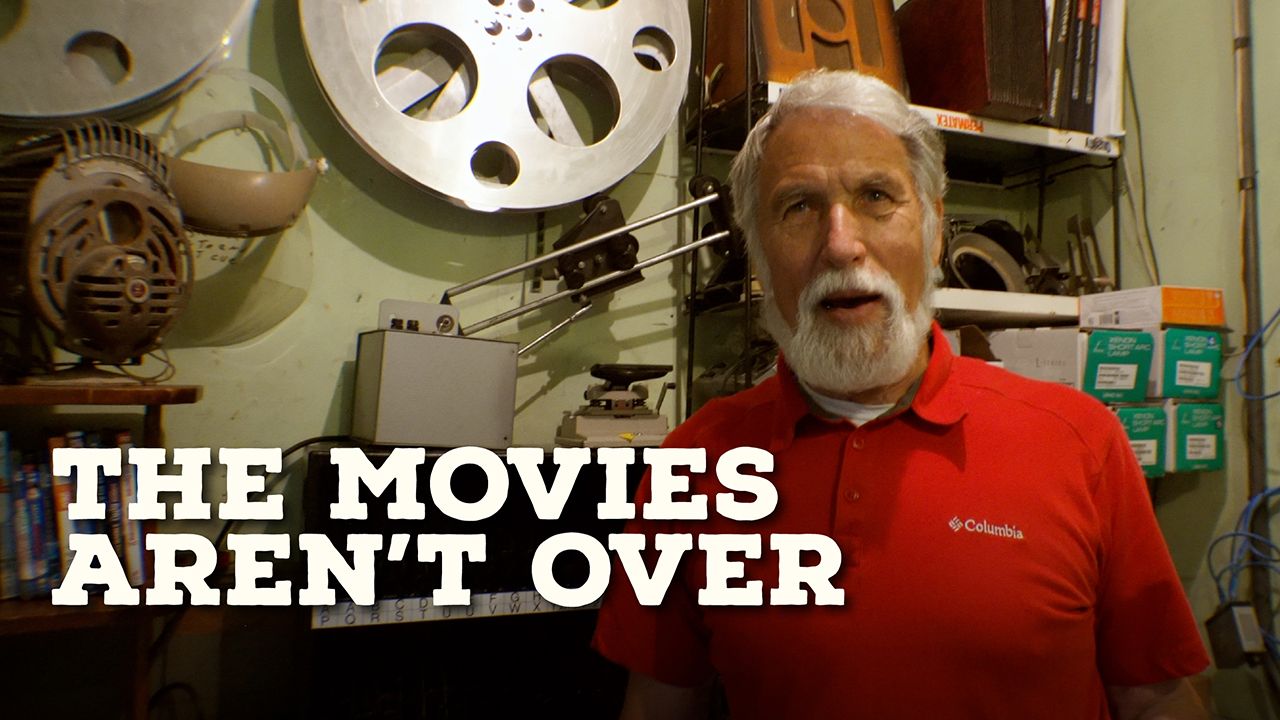
Keith Jarrett’s The Köln Concert is the best-selling solo album in jazz history — a live recording of his extraordinary January 24, 1975, performance at the Cologne Opera House. Earlier this year, the album was inducted into the Library of Congress’s National Recording Registry, cementing its place as one of the most iconic moments in modern music.


In KÖLN 75, filmmaker Ido Fluk turns the familiar music-biopic formula on its head, reframing the story through the eyes of Vera Brandes, the 18-year-old promoter who made the concert happen. With a spirit that owes more to punk rock than free jazz, Brandes is brought vividly to life by Mala Emde, while John Magaro delivers a mesmerizing portrayal of the mercurial Jarrett.


You don’t have to be a jazz aficionado to love this film. KÖLN 75is a vibrant, unconventional look at creativity, youth, and artistic risk — and anyone who appreciates original arthouse cinema will find something to connect with here.


Join us for our conversation with filmmaker Ido Fluk, on Inside the Arthouse — starting now.

One has to wonder what Miguel de Cervantes would make of Patrick McCullum. As we meet Patrick at the start of Gabe Polsky’s documentary THE MAN WHO SAVES THE WORLD?, we aren’t quite sure what to make of him. And, frankly, filmmaker Polsky isn’t sure either.

Is Patrick, a self-proclaimed healer and mystic, truly the person who will fulfill a prophecy and bring unity and protection to the indigenous people of the Amazon? Or, like the hero of Cervantes’s novel Don Quixote, is he just a crazy kook tilting at windmills?

With filmmaker Polsky as our Sancho Panza, and with a question mark hanging at the end of the film’s title, we are along for the ride as we try to figure out whether Patrick – or anyone else – can truly save the world.  

By the nature of the word, we have come to expect that documentaries will deal in certainty. But THE MAN WHO SAVES THE WORLD? reminds us that sometimes, it pays to recognize and respect that there are things we don’t — or perhaps can’t — fully know.

The film also features an appearance by Dr. Jane Goodall, whose lifelong commitment to compassion, science, and the natural world continues to inspire generations. In light of her recent passing, we honor her extraordinary life and the wisdom she shared with such grace — both in this film and throughout her remarkable journey.

To learn more about this fascinating film, join us for our conversation with Gabe Polsky on INSIDE THE ARTHOUSE, starting now.