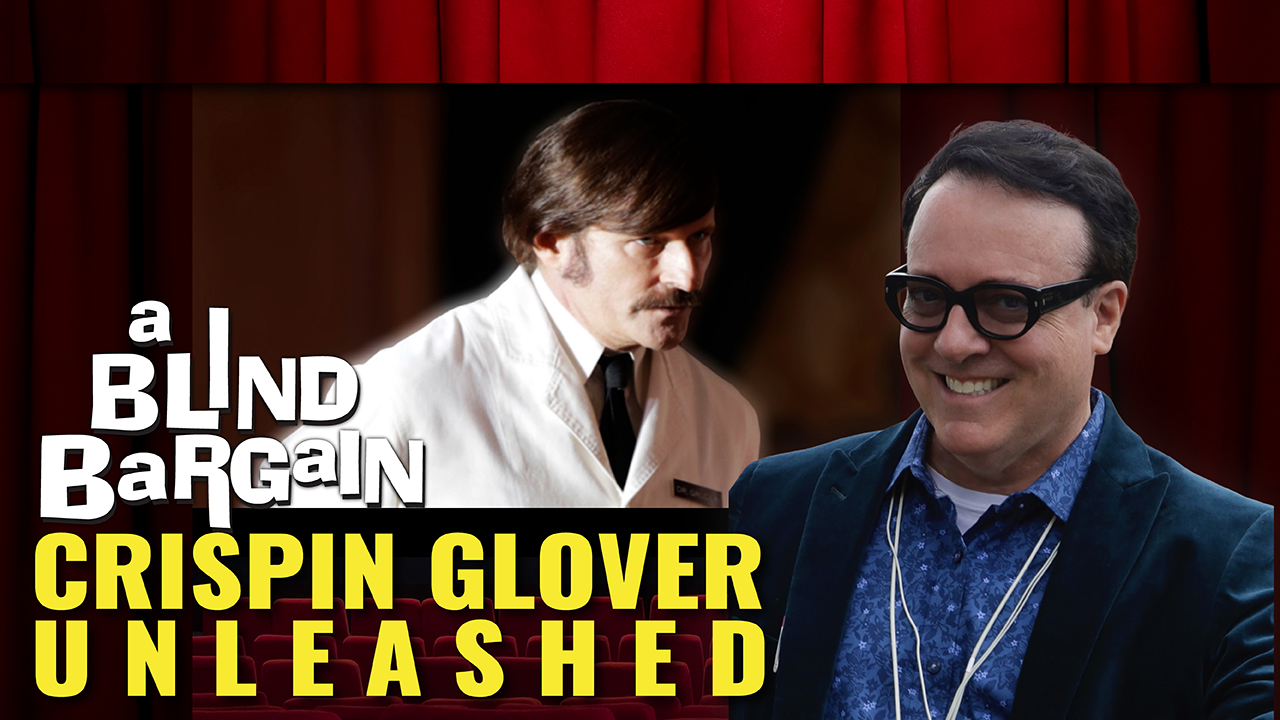
The 1922 film A BLIND BARGAINhas long held a mythic status—one of the most sought-after lost films of the silent era.
Lon Chaney starred in a dual role. The film was released by Goldwyn Pictures after a battle with censors… and then, like so many films of the period, it disappeared.
No print survives. What remains are fragments: a lobby card and a single still of Chaney in makeup as one of his haunting, monstrous creations.
We know the film was based on the 1897 horror novel The Octave of Claudius. From that small thread, a new question emerges: what does it mean to reimagine something that no longer exists?
Director and co-writer Paul Bunnell takes that idea into the 1970s—a moment that echoes the 1920s, shaped by post-war dislocation, shifting norms, and a culture of escapism.
With Crispin Glover stepping into one of Chaney’s roles as a mad doctor, the film becomes something both eerie… and unexpectedly playful.
Bunnell has been making films since he was eleven, and his deep love of cinema—especially its history—runs through our conversation about his new film, A BLIND BARGAIN on INSIDE THE ARTHOUSE.