The fighting in Gaza is less intense at the moment thanks to the fragile ceasefire, but the conflict between Israel and the Palestinians continues. Sustained negotiations are required to address past grievances and to arrive at a just and sustainable peace.  

But what if instead of humorless politicians sitting around the table, each side sent a team of comedians? Is laughter perhaps the best way to break through anger and hurt?

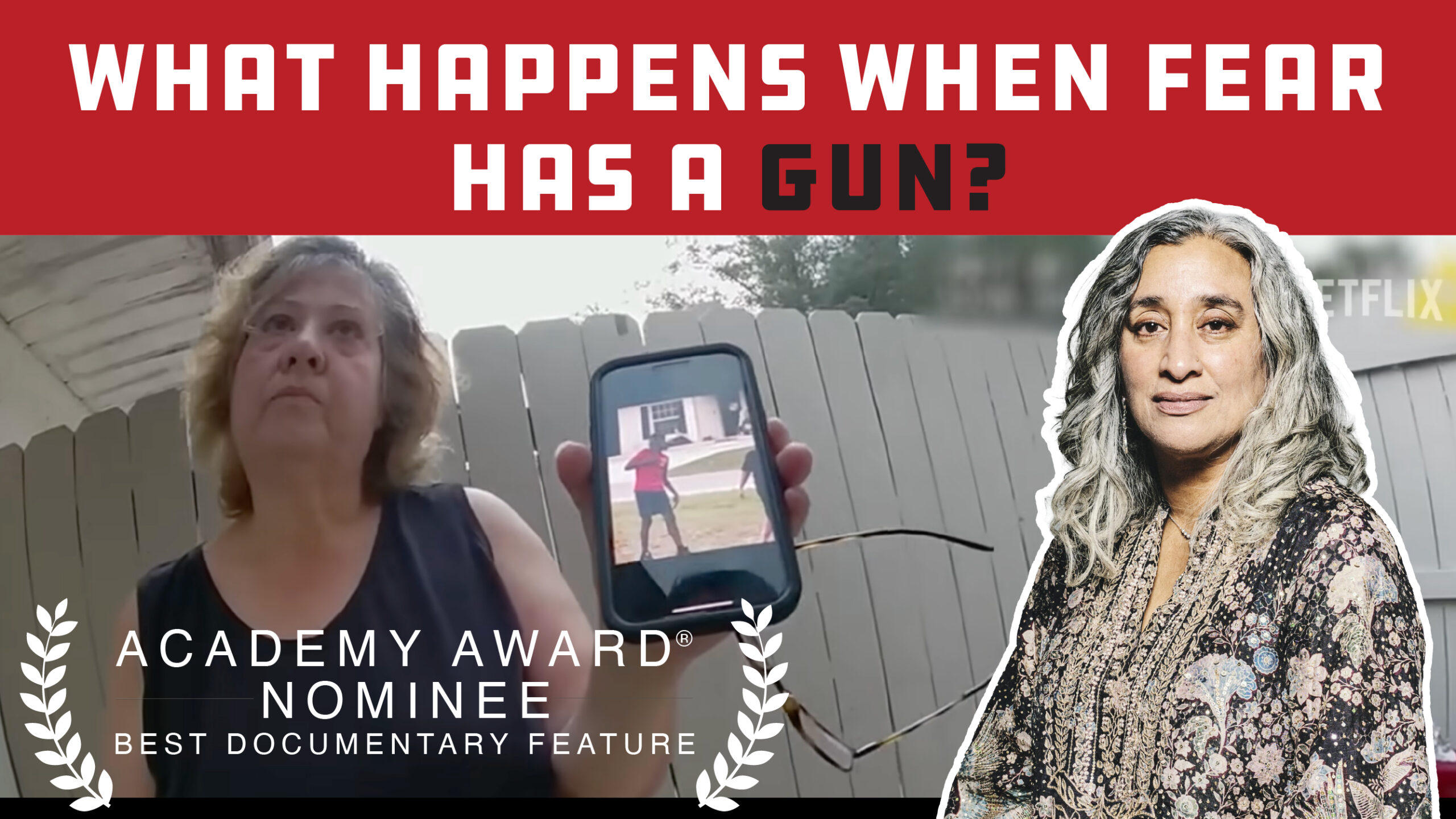
In Amber Fares’s film, COEXISTENCE, MY ASS!, we meet Noam Shuster-Eliasi, a former UN staffer who decided to leave politics to become a comedian. As we follow Noam from the early days of developing her one-woman show, through the pandemic shutdown, and to the horrific events of October 7, 2023, and the early days of the war in Gaza, we see a warrior for peaceful coexistence who won’t give up on her quest to use humor to make people see the truth.

Just like the fool in King Lear, comedians have a unique ability to speak truth to power. And as late-night hosts struggle to stay on the air in the US, we see that the effort to suppress political satirists is not confined to the Middle East.

Our conversation with filmmaker Amber Fares, and the subject of her documentary Noam Shuster Eliassi starts now, on INSIDE THE ARTHOUSE

Posted in All

The question of illegal immigration is all over the news these days. But in a media environment where journalists are trying to either make you angry or afraid, it’s not always easy to see the actual people beyond the headlines.

In his new documentary ROADS OF FIRE, filmmaker Nathaniel Lezra turns down the volume, providing a nuanced look at three sides of this complicated situation.

One thread follows a group of immigrants making their way from Venezuela to Colombia, where they start the dangerous overland hike through Panama’s Darién Gap.

Another thread introduces us to the advocates, religious leaders, and community volunteers working in and around New York City who are trying to house, feed, and guide the immigrants who have been granted temporary asylum.

And finally, we spend time getting to know one asylum seeker who is trying to make a new life in the United States for herself and her children as she flees an abusive situation in her home country.

Whatever you believe about the policies around the issue of immigration, there is much to learn and appreciate in this timely film, and we hope that our discussion with Nathaniel Lezra is a worthy accompaniment.

So join us for our conversation on INSIDE THE ARTHOUSE, starting now.

Keith Jarrett’s The Köln Concert is the best-selling solo album in jazz history — a live recording of his extraordinary January 24, 1975, performance at the Cologne Opera House. Earlier this year, the album was inducted into the Library of Congress’s National Recording Registry, cementing its place as one of the most iconic moments in modern music.


In KÖLN 75, filmmaker Ido Fluk turns the familiar music-biopic formula on its head, reframing the story through the eyes of Vera Brandes, the 18-year-old promoter who made the concert happen. With a spirit that owes more to punk rock than free jazz, Brandes is brought vividly to life by Mala Emde, while John Magaro delivers a mesmerizing portrayal of the mercurial Jarrett.


You don’t have to be a jazz aficionado to love this film. KÖLN 75is a vibrant, unconventional look at creativity, youth, and artistic risk — and anyone who appreciates original arthouse cinema will find something to connect with here.


Join us for our conversation with filmmaker Ido Fluk, on Inside the Arthouse — starting now.

One has to wonder what Miguel de Cervantes would make of Patrick McCullum. As we meet Patrick at the start of Gabe Polsky’s documentary THE MAN WHO SAVES THE WORLD?, we aren’t quite sure what to make of him. And, frankly, filmmaker Polsky isn’t sure either.

Is Patrick, a self-proclaimed healer and mystic, truly the person who will fulfill a prophecy and bring unity and protection to the indigenous people of the Amazon? Or, like the hero of Cervantes’s novel Don Quixote, is he just a crazy kook tilting at windmills?

With filmmaker Polsky as our Sancho Panza, and with a question mark hanging at the end of the film’s title, we are along for the ride as we try to figure out whether Patrick – or anyone else – can truly save the world.  

By the nature of the word, we have come to expect that documentaries will deal in certainty. But THE MAN WHO SAVES THE WORLD? reminds us that sometimes, it pays to recognize and respect that there are things we don’t — or perhaps can’t — fully know.

The film also features an appearance by Dr. Jane Goodall, whose lifelong commitment to compassion, science, and the natural world continues to inspire generations. In light of her recent passing, we honor her extraordinary life and the wisdom she shared with such grace — both in this film and throughout her remarkable journey.

To learn more about this fascinating film, join us for our conversation with Gabe Polsky on INSIDE THE ARTHOUSE, starting now.

You’ve probably never heard of PUBLIC ACCESS — the 1993 Sundance Film Festival Grand Jury Prize (Dramatic) winner — but you’ve almost certainly heard of Keyser Soze, the enigmatic villain at the heart of the 1995 Oscar-winning THE USUAL SUSPECTS. So what connects these two films?

On this episode of INSIDE THE ARTHOUSE, we sit down with Ken Kokin, the producer of both of these films, and discuss how the same creative team – director Bryan Singer, screenwriter Christopher McQuarrie, editor/composer John Ottman, and producer Kokin – went from making an obscure festival prize winner to creating one of the great mystery crime thrillers of all time.

Marking the 30th anniversary of THE USUAL SUSPECTS, this conversation is fun, candid, and illuminating: the origin of Keyser Soze, building the creative collaboration, the leap from festival buzz to Academy Award glory, and the producing lessons behind a legendary twist ending. If you love behind-the-scenes stories, neo-noir thrillers, or the making of cult classics, you’re in the right place.

Join us as we discuss one of our favorite arthouse favorites, THE USUAL SUSPECTS, with producer Ken Kokin, on INSIDE THE ARTHOUSE, starting now.  

You may not be overly familiar with the 2000s TV show To Catch a Predator,” but chances are you’ve heard about it. Originally starting as a segment on NBC Dateline, the Chris Hansen–hosted program became a cultural sensation, drawing huge audiences even as critics questioned its sordid tone and the ethical and legal issues surrounding its infamous “sting” operations.

Although To Catch a Predator” went off the air in 2008, the rise of internet entertainment sparked a wave of copycat shows, and Chris Hansen himself returned with new true crime programming on streaming platforms. Yet, with all the popularity surrounding Hansen and these types of programs, the bigger questions — Should these shows exist? Are they truly helping solve problems, or exploiting them? — have often been ignored.

In PREDATORS, award-winning filmmaker David Osit (MAYOR, THE BALLAD OF LEFTY BROWN) shines a powerful light on this phenomenon. His documentary dissects why audiences are drawn to these programs, puts Chris Hansen and others under scrutiny, and challenges the ethics of entertainment disguised as justice.

Praised by critics as one of the year’s best documentaries — and already generating Oscar buzz — PREDATORS is a must-see for anyone interested in true crime, media ethics, or the intersection of entertainment and justice.

Join us for our conversation with David Osit, where we dive deep into his filmmaking process, the legacy of “To Catch a Predator”,and the cultural fascination with predator-hunting shows. On INSIDE THE ARTHOUSE, starting now… 

Horror films have haunted cinema since its earliest days — from the silent terror of NOSFERATUto the iconic Universal Monsters of the 1930s, to demonic classics like ROSEMARY’S BABY and THE EXORCIST. For generations, filmmakers have pushed the boundaries of fear, redefining what it means to scare audiences.

Then came 1974. When THE TEXAS CHAINSAW MASSACRE premiered, it didn’t just terrify audiences; it changed horror forever. Directed by Tobe Hooper, this low-budget, gritty masterpiece arrived in the aftermath of Vietnam and political turmoil, channeling the anxieties of its time. Today, it remains one of the most influential horror movies ever made, inspiring generations of filmmakers.


Acclaimed documentarian Alexandre O. Philippe turns his lens on THE TEXAS CHAINSAW MASSACRE in his new documentary CHAIN REACTIONS. Rather than retelling the well-known production story, Philippe highlights the film’s cultural impact through the eyes of five devoted fans — all accomplished artists themselves. They reveal how this horror classic shaped their creativity, careers, and storytelling.


Philippe has built his career exploring cinema’s cultural touchstones. His celebrated works include 78/52 — a deep dive into Alfred Hitchcock’s iconic Psycho shower scene — and LYNCH/OZ, which uncovers how THE WIZARD OF OZ influenced David Lynch’s surreal filmmaking. With CHAIN REACTIONS, Philippe adds another must-see documentary to his filmography.

Whether you’re a lifelong horror fan, a filmmaker seeking inspiration, or just curious about why THE TEXAS CHAINSAW MASSACRE still matters today, this conversation is for you. Even if you don’t typically watch horror films, you’ll find fresh insight and passion in our discussion with CHAIN REACTIONS director Alexandre O. Philippe on Inside the Arthouse, starting now… 

The New York Film Festival (NYFF) may not be the oldest film festival in the United States, but for more than 60 years, it has been one of the most influential, premiering some of the most important films and filmmakers in the history of cinema.  


From Luis Buñuel’s  THE EXTERMINATING ANGELthe opening night selection in 1963, to RaMell Ross’s NICKEL BOYS in 2024, the festival has consistently set the stage for awards season and marked the beginning of the race to the Oscars.

In this episode of INSIDE THE ARTHOUSE, we sit down with Dennis Lim, the festival’s Artistic Director and former film critic at the Village Voice, to discuss how the NYFF program is curated, what makes this event unique, and what audiences can expect from the 2025 New York Film Festival. Lim also shares insights on the broader programming of Film at Lincoln Center, one of the most vital institutions for independent and international cinema in the U.S.

Join us as we sit down with festival director Dennis Lim on INSIDE THE ARTHOUSE, starting now.
 

The world could use Elie Wiesel right now. A voice with the moral integrity and courage to speak truth to power—no matter the cost.

Whether it was challenging Ronald Reagan over his decision to visit the Bitburg Cemetery, where SS soldiers were buried, or confronting Bill Clinton about America’s inaction during the ethnic cleansing in Bosnia, Wiesel never wavered in his fight against injustice and his relentless pursuit of a world free of the kind of genocide that scarred his youth.

Wiesel is no longer here to provide that kind of prophetic guidance. But in Oren Rudavsky’s film, ELIE WIESEL: SOUL ON FIRE, we do have the rare opportunity to spend time with Wiesel, with his wife and children, and with the teachers and students who continue to carry on his work.

Told in his own words and eloquent voice, the film captures Wiesel’s conflicts, memories, and enduring legacy as one of the most public survivors to the Holocaust.

Whether you know Wiesel’s story or are discovering it for the first time, ELIE WIESEL: SOUL ON FIRE is a moving, deeply inspirational portrait. We hope our conversation with the filmmaker encourages you to seek out this remarkable film.

Join us for our conversation with director Oren Rudavsky on INSIDE THE ARTHOUSE, starting now.
Writer and philosopher George Santayana wrote in 1905: “Those who cannot remember the past are condemned to repeat it.”

That idea has clearly inspired filmmaker Connie Field. Her award-winning documentaries on politics, history, and social change help us understand today’s world by drawing vital lessons from the past.

When women from the Baby Boom generation were entering the workforce, her groundbreaking film The Life and Times of Rosie the Riveter revealed the powerful stories of women who worked in World War II factories.

As voter suppression became a growing issue in parts of the U.S., her Oscar-nominated Freedom on My Mind reminded us of the importance of voting rights by documenting voter registration struggles in Mississippi during the 1960s Civil Rights Movement.

Now, Connie Field turns her lens to Europe—examining the election, defeat, and return to power of Viktor Orbán in Hungary.

The result is DEMOCRACY NOIR — a timely and chilling look at how democratic institutions can be weakened and reshaped into tools of authoritarian rule.

Democracy Noir is an urgent, important film. And we’re honored to share our conversation with Connie Field about the film—and about the state of democracy— on Inside the Arthouse, starting now…