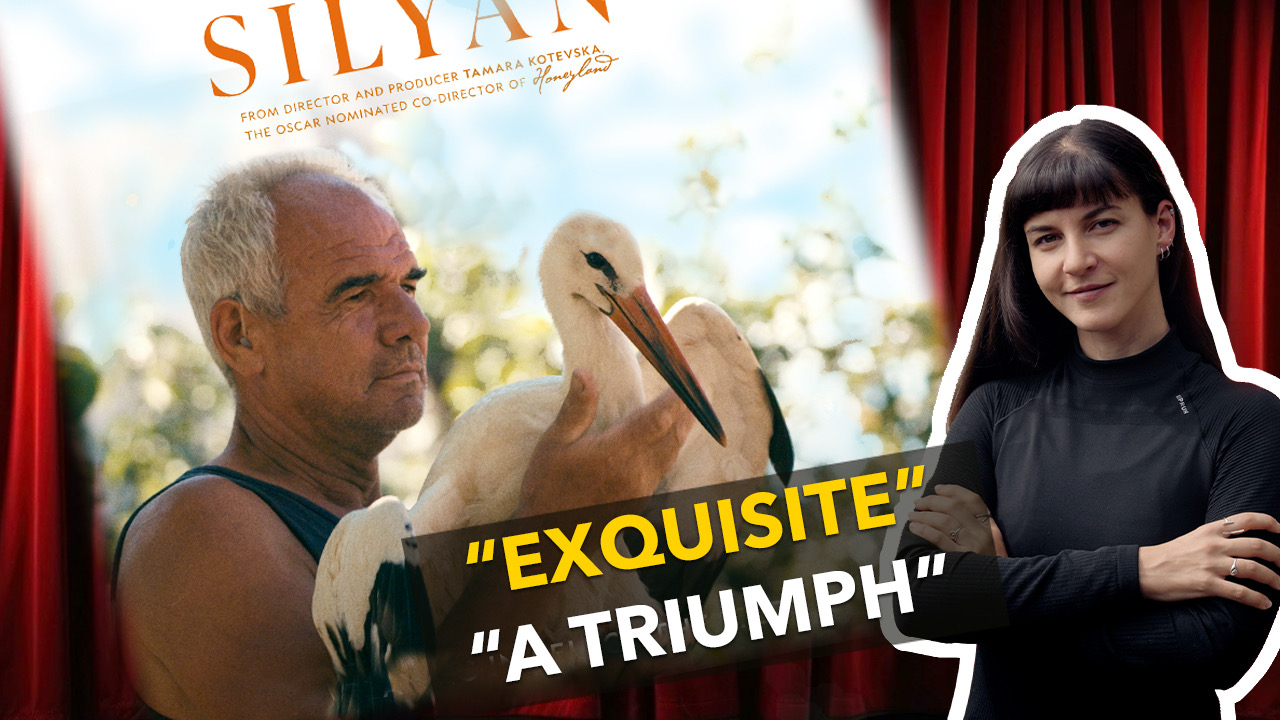
In THE TALE OF SILYAN — the highly anticipated follow-up to the Oscar-nominated documentary HONEYLAND— filmmaker Tamara Kotevska set out to explore how climate change is reshaping the migration patterns of storks in Macedonia. But over three years of filming, she and cinematographer Jean Dakar uncovered something far more expansive: an intimate portrait of global economic pressure, human migration, the unraveling of rural communities, and the fragile, deeply intertwined relationship between people, land, and wildlife.

What’s remarkable is how, at moments, THE TALE OF SILYAN plays like a narrative feature — yet nothing is staged. Every frame is real. And the story that unfolds is genuinely astonishing.

To dig into how this groundbreaking documentary came together — from early concept to final cut — we sat down with the film’s DP, Jean Dakar, for a conversation about craft, access, and capturing truth on camera.

That conversation on INSIDE THE ARTHOUSE, starting now…


They say journalism is the first rough draft of history—but what about films that confront historical events on screen? Are these works attempts at historical record or cinematic stories that use the past to uncover deeper emotional truths?

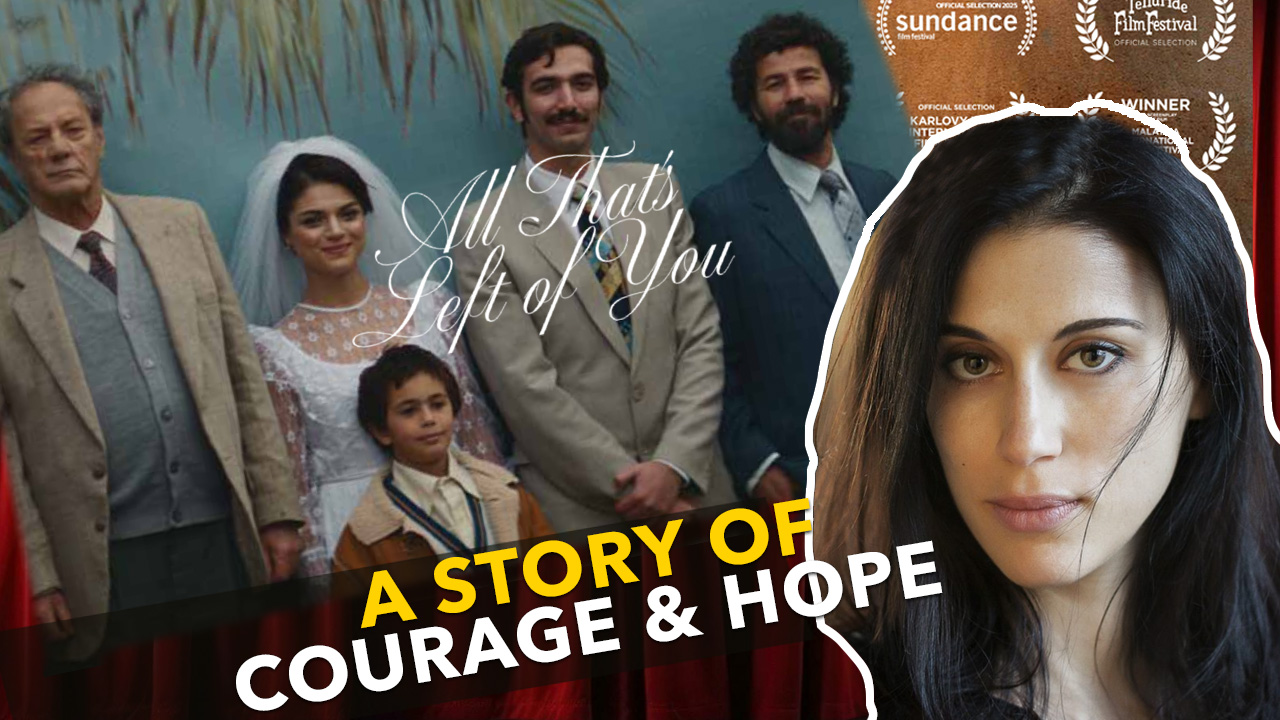
With her new film ALL THAT’S LEFT OF YOU, filmmaker Cherien Dabis brings a bold and deeply human perspective to a chapter of history rarely explored in American cinema. While the film depicts the Nakba and the 1948 expulsion from Jaffa, Dabis goes far beyond historical recreation—crafting a powerful emotional narrative that stands among the finest films of the year.

This sweeping, multigenerational epic follows one family across 70 years, tracing their journey from displacement during the 1948 war to life as refugees in the West Bank and beyond. Dabis stars in the film alongside three extraordinary actors from the renowned Bakri family—Adam Bakri, Saleh Bakri, and Mohammad Bakri—whose performances bring the family’s story to life with remarkable authenticity and depth.

After premiering to acclaim at the Sundance Film Festival, ALL THAT’S LEFT OF YOU went on to win the prestigious Audience Award at the Sydney Film Festival. The film has now been chosen as Jordan’s official submission for Best International Feature at the Academy Awards, and we believe it has every chance of making the year’s shortlist. To hear more about ALL THAT’S LEFT OF YOU, please sit back and enjoy our conversation with filmmaker, writer, and actress, Cherien Dabis, starting now on INSIDE THE ARTHOUSE

$7,000 might buy you a used car—but in Hollywood, it barely covers a single day of craft services on a studio film set.

But in the world of microbudget filmmaking, $7K became the entire production budget for filmmakers Joe Burke and Oliver Cooper, who used that tiny sum to create a full-length, truly independent feature film.

With a small crew, non-professional actors, shooting quickly, with a raw, natural shooting style, they crafted BURT— a miracle of sweetness and depth— a film that captures the spirit of classic indie cinema, echoing the charm of mumblecore pioneers like Andrew Bujalski, Greta Gerwig, and the Duplass Brothers.

Having wowed audiences at numerous film festivals, Joe and Oliver are channeling the Cassavetes playbook—and releasing BURT themselves into theaters.

On this episode of Inside the Arthouse, we wanted to talk to them about the inspiration for the film, their creative process, how they pulled off a feature on a shoestring budget, and the strategy behind bringing an independent film directly to audiences.

BURT is a small gem of a film, and Joe and Oliver are great examples of the indie spirit.

So if you’re dreaming of selling your car to make a movie—or want to learn how authentic independent films get made—you’ll want to start this episode right now… on Inside the Arthouse.

The New York Film Festival (NYFF) may not be the oldest film festival in the United States, but for more than 60 years, it has been one of the most influential, premiering some of the most important films and filmmakers in the history of cinema.  


From Luis Buñuel’s  THE EXTERMINATING ANGELthe opening night selection in 1963, to RaMell Ross’s NICKEL BOYS in 2024, the festival has consistently set the stage for awards season and marked the beginning of the race to the Oscars.

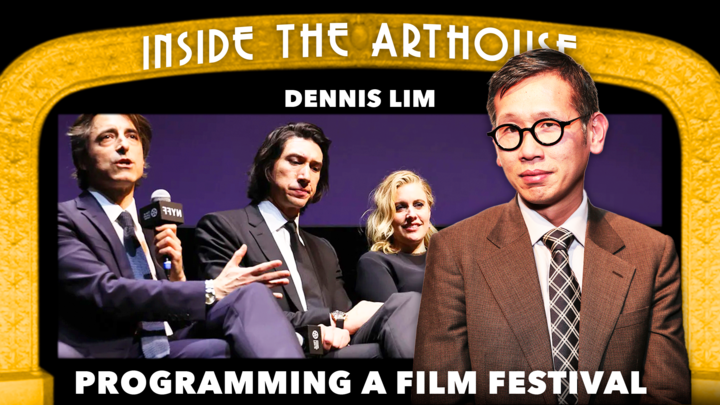
In this episode of INSIDE THE ARTHOUSE, we sit down with Dennis Lim, the festival’s Artistic Director and former film critic at the Village Voice, to discuss how the NYFF program is curated, what makes this event unique, and what audiences can expect from the 2025 New York Film Festival. Lim also shares insights on the broader programming of Film at Lincoln Center, one of the most vital institutions for independent and international cinema in the U.S.

Join us as we sit down with festival director Dennis Lim on INSIDE THE ARTHOUSE, starting now.
 

Writer and philosopher George Santayana wrote in 1905: “Those who cannot remember the past are condemned to repeat it.”

That idea has clearly inspired filmmaker Connie Field. Her award-winning documentaries on politics, history, and social change help us understand today’s world by drawing vital lessons from the past.

When women from the Baby Boom generation were entering the workforce, her groundbreaking film The Life and Times of Rosie the Riveter revealed the powerful stories of women who worked in World War II factories.

As voter suppression became a growing issue in parts of the U.S., her Oscar-nominated Freedom on My Mind reminded us of the importance of voting rights by documenting voter registration struggles in Mississippi during the 1960s Civil Rights Movement.

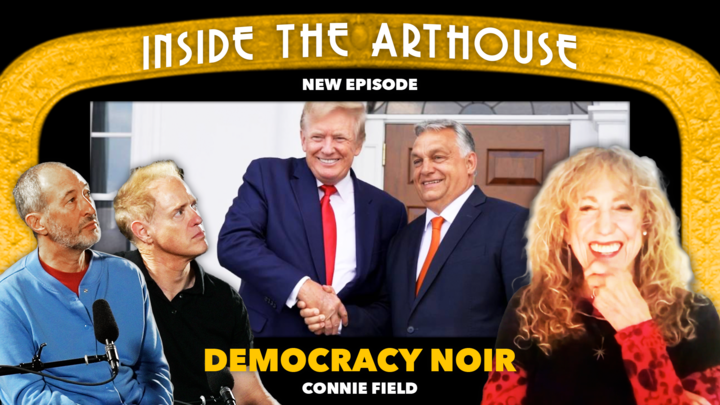
Now, Connie Field turns her lens to Europe—examining the election, defeat, and return to power of Viktor Orbán in Hungary.

The result is DEMOCRACY NOIR — a timely and chilling look at how democratic institutions can be weakened and reshaped into tools of authoritarian rule.

Democracy Noir is an urgent, important film. And we’re honored to share our conversation with Connie Field about the film—and about the state of democracy— on Inside the Arthouse, starting now…


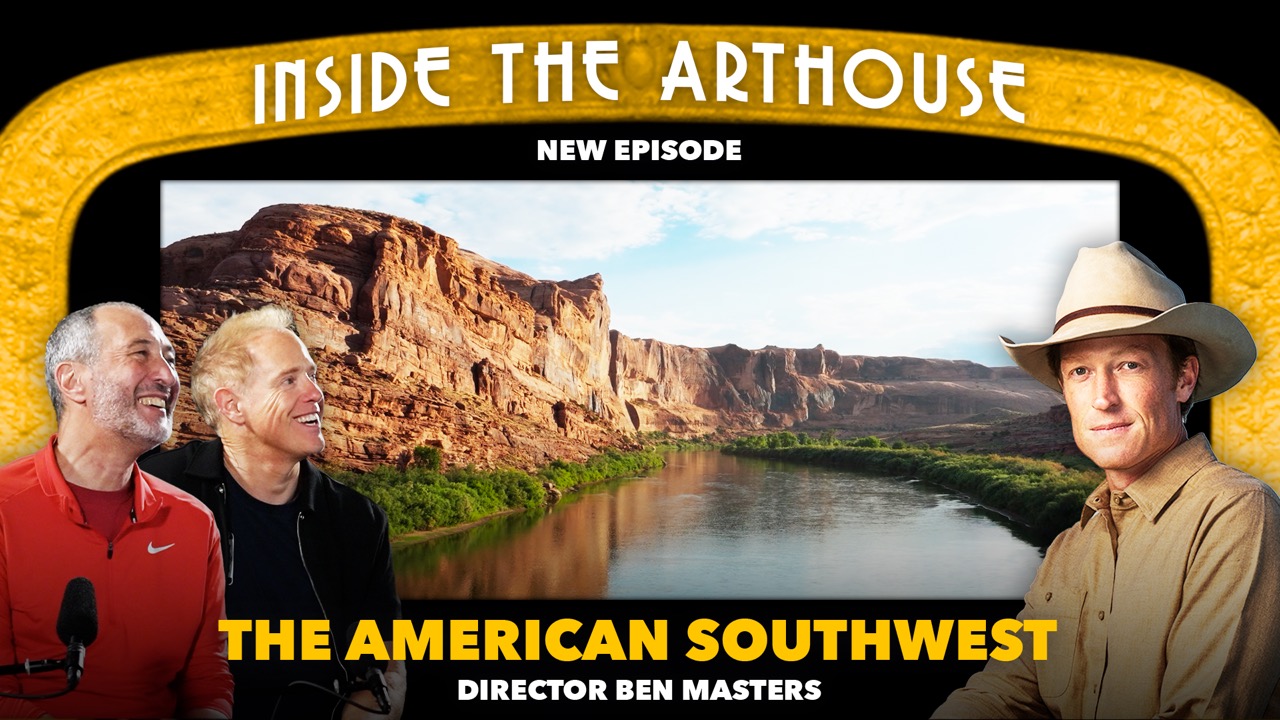
Thank God for nature filmmakers. Sure, we could try to get ourselves out to some breathtaking wilderness. But would we really have the time—or the patience—to wait for a herd of elk to appear? Or the equipment to capture a shy family of beavers building a dam? And don’t even get me started on the vertigo that would stop me from watching a young condor soar above the Grand Canyon.

Thankfully, filmmaker Ben Masters and his team of cinematographers have done all of that for us. They’ve spent countless hours in the field, so that we can experience these wonders in under two hours—and for the price of a ticket.

THE AMERICAN SOUTHWEST is Masters’ third feature documentary, and it’s a stunning addition to his body of work. This time, he takes us along the mighty Colorado River, from its headwaters in the Rockies, through the Grand Canyon, and down to the Gulf of California. Along the way, we meet the signature species that call the river home, and we come to understand the delicate balance of this vital ecosystem.

The film not only helps us appreciate these creatures and landscapes, but also explores the impact we humans have on the river—and how we might become better stewards of our environment.

It’s a beautiful, meaningful film with something for audiences of all ages.

Join us now for our conversation with Ben Masters, Inside the Arthouse, starting now.

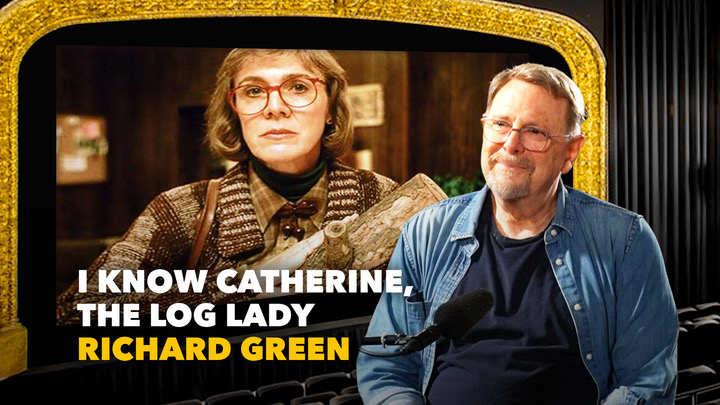
For so many of us who grew up captivated by the strange, haunting world of Twin Peaks, the Log Lady was a mystery, a messenger, and somehow—comforting. But what we didn’t always know was that the actress who played her, Catherine Coulson, was so much more than her role. She was a beloved collaborator of David Lynch, one of the earliest female camera assistants in Hollywood, and someone whose quiet presence left a deep impression on everyone she worked with.

A new documentary titledI KNOW CATHERINE, THE LOG LADY is more than a portrait of a beloved character—it’s a revealing and heartfelt exploration of the woman behind the legend. Through rare archival footage, intimate interviews, and stories from those who knew her best, this film traces Coulson’s singular journey from the sets of avant-garde student films, her prolific career as a stage actress, to the heart of one of television’s most enigmatic creations.

At once a celebration and an act of remembrance, this documentary captures the spirit of a true original—someone who, like her famous counterpart, saw things most of us couldn’t and never stopped quietly guiding us toward something deeper, stranger, and more profound.

Join us with director Richard Green as we sit down with him to discuss his film, I KNOW CATHERINE, THE LOG LADY, on INSIDE THE ARTHOUSE, starting now…

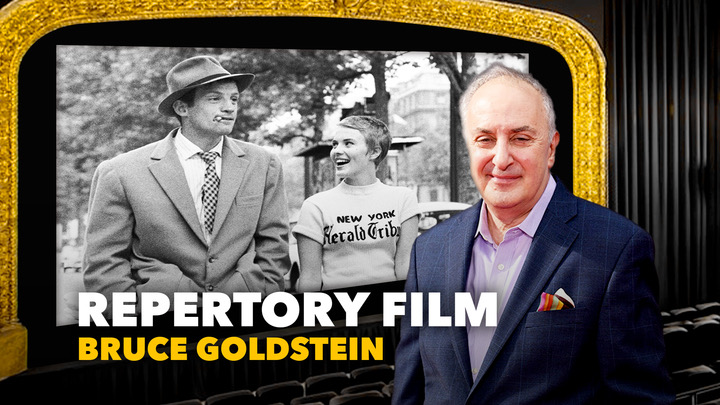
At INSIDE THE ARTHOUSE, we love discovering bold new voices and emerging filmmakers. But there’s something uniquely rewarding about revisiting a classic—whether it’s an old favorite or a legendary film you’ve always meant to watch. And seeing these films on the big screen in a real movie theater is the way they were meant to be experienced.

Repertory cinema in the U.S. has faced its share of challenges, from the rise of home video and streaming to rising urban real estate costs. Many iconic rep theaters have closed. But in recent years, there’s been a revival of interest in classic and cult films, shown theatrically in new restorations and 35mm prints.

One of the most influential figures in this movement is Bruce Goldstein, longtime repertory programmer at Film Forum in New York City and founder of Rialto Pictures. For over 50 years, Bruce has been a champion of film history—curating, restoring, and re-releasing cinematic landmarks. In early 2025, Rialto re-released Claude Lelouch’s A Man and a Woman, and coming soon is a brand-new 4K restoration of Jean-Jacques Beineix’s Diva.

We sat down with Bruce Goldstein in New York to talk about the past, present, and future of repertory film programming in the U.S.—and how he’s helped shape what American audiences get to see on the big screen.

As part of producing Inside the Arthouse, we see a lot of movies. And while many are compelling and well-made, naturally some of them stand out. Of all the films we’ve seen so far this year, DON’T LET’S GO TO THE DOGS TONIGHT has definitely moved to the top of the list.  

Based on a memoir of the same name by Alexandra Fuller, this powerful film has been brought to the screen by first-time director Embeth Davidtz. An actress who has worked with filmmakers like Steven Spielberg, Robert Altman, and Sam Raimi, Ms. Davidtz draws from her own experiences growing up in apartheid South Africa to bring striking authenticity to the story of a family of white farmers in Zimbabwe.

The film is told through the eyes of young Bobo — played with extraordinary depth by newcomer Lexi Venter — as she witnesses the political upheaval in a land on the brink of change.

A hit at the prestigious Telluride and Toronto International film festivals, DON’T LET’S GO THE DOGS TONIGHT is opening on July 11 in New York and Los Angeles before rolling out nationally.

You won’t want to miss our conversation with Ms. Davidtz where we discuss her journey from actor to filmmaker and the challenges of adapting this beloved memoir — on Inside the Arthouse, starting now…

As the new luminous film FAMILIAR TOUCH opens, we meet Ruth, an independent and self-assured octogenarian who is embarking on a journey of both mind and body. Her body is moving into a memory care facility. Her mind is evolving in ways that are hard for her family to understand. But as played by acclaimed actress Kathleen Chalfant, we vividly experience this journey through Ruth’s eyes. And Ruth is never lost. She just is where she is: in the moment.

Inspired by her experiences as a caretaker, writer-director Sarah Friedland has made a “coming of age story” and imbued FAMILIAR TOUCH with a spirit and depth that avoids the usual tropes that we associate with films about cognitive decline. Filmed almost entirely at a retirement community, which involved members and staff of the facility both behind and in front of the camera, FAMILIAR TOUCH feels “real” in a way that most films can only hope to achieve.

The film premiered at the Venice Film Festival, where it was awarded the Best Director and Best Actress prizes, and it is now opening in theatres across the U.S.

We love this movie and are so happy that writer-director Sarah Friedland and actress Kathleen Chalfant were able to join us to talk about making FAMILIAR TOUCH. So sit back and join us for our conversation on INSIDE THE ARTHOUSE,starting now…